
Research Focus
- Our lab focuses on: quantitative fisheries ecology, population dynamics, and fisheries stock assessments and management.
- We investigate the interactions between commercial fishing, ecological variables and dynamics of fisheries populations and communities.
- Our goal is to develop sustainable fisheries and ecosystem-based management approach, using an interdisciplinary approach of fisheries biology, ecology, management policy, decision making theory, mathematical and statistical modeling, and computer simulations.
Chen Lab in the News
Current Research Highlights
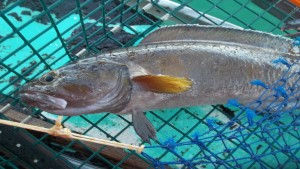 Survivability of recompressed barotraumatized groundfish bycatch in the Maine lobster fishery
Atlantic cod and cusk are subject to barotrauma when quickly brought to the surface by lobster traps, which induces physical trauma to the fish. We want to test methods of reversing this physical trauma and thereby increasing thier survival rate.
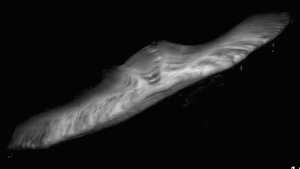
Assessing Growth Rates and Habitat Preferences of Atlantic Halibut Off the Coast of Maine
This research aims to quantify growth rates of Atlantic halibut through otolith analysis and to describe habitat preferences by combining rigorous statistical analyses and modeling with fishermen’s knowledge.
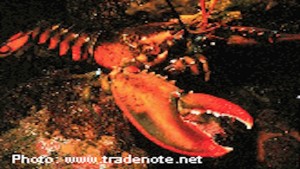
Assessment and Management of American Lobster Fisheries
• Development of a user-friendly stock assessment model for the American lobster
• Developing and evaluating biological reference points for the American lobster fishery management
• Ecosystem dynamics of American lobster
• Evaluating lobster monitoring program
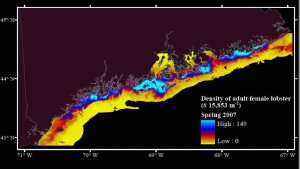
Estimating season-, size-, and sex-specific spatial distribution of American lobster (Homarus americanus) using key habitat variables
Spatial distributions of American lobster are influenced by many factors. We developed a modeling approach for quantifying the season-, size-, and sex-specific lobster spatial distribution with respect to environmental and spatial variables in the Gulf of Maine.
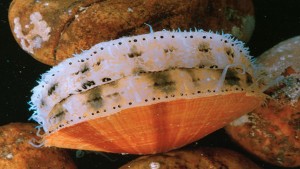 Analysis of the spatial distribution of fish populations with respect to habitat variables for sea scallops (Placopecten magellanicus) in the Gulf of Maine
 This research focuses on the incorporation of environmental variables into fisheries assessment. Photo Credit: NOAA
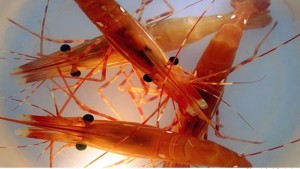
Feasibility of Certifying the Gulf of Maine Shrimp Trap Fishery as Sustainable
With an unstable market and an increased proportion of catch coming from the trap shrimp fishery the goal of this project is to understand the benefit and feasibility of certifying the trap fishery as sustainable with the Marine Stewardship Council (MSC).
Photo: articles.sfgate.com
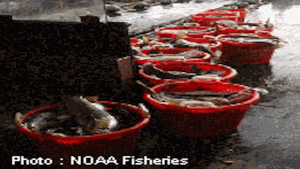
Assessing the biological impacts of groundfish surveys- a metapopulation approach
This project seeks to evaluate the role played by population structure in shaping the statistical performance and ecological effects of alternative groundfish sampling strategies.
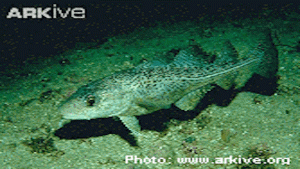
Assessing the biological impacts of groundfish surveys- a metapopulation approach
The Gulf of Maine Atlantic cod (Gadus morhua) fishery has suffered from stock collapse and an inability to recover. Managing cod stocks with regards to the biological scale of the fishery may have an impact on the recoverability of the stocks.