SUBMISSION GUIDELINES

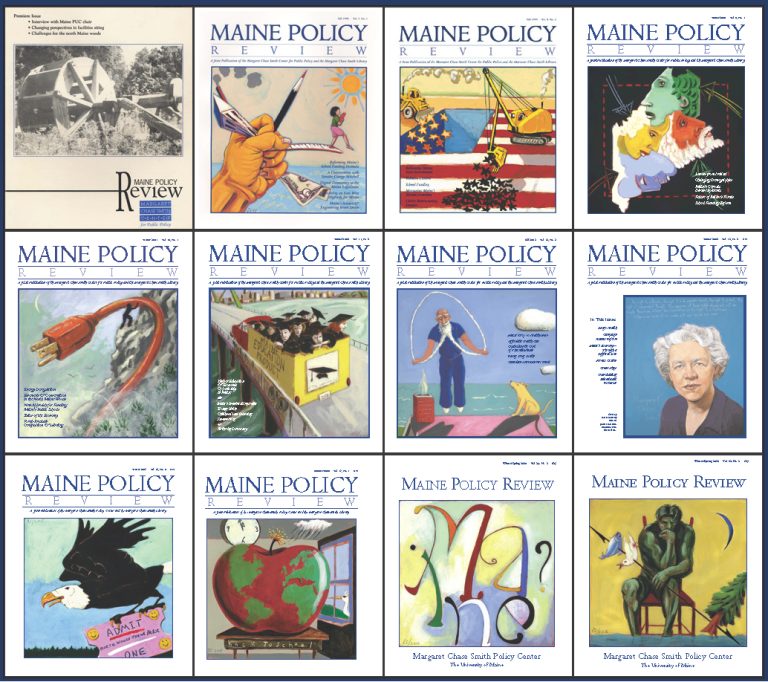
Maine Policy Review encourages article submissions.  The journal provides timely, independent analysis of public policy issues affecting Maine and/or the region.  Articles with a national or international focus also are considered as long as their relevance to public policy formulation in Maine is clearly established by the author.

Maine Policy Review is nonpartisan and encourages debate among its contributors.  It is intended for a diverse audience including state policymakers, government, business, and nonprofit leaders, and general readers with a broad interest in public policy.  Many of its articles are based on some form of applied research or independent inquiry.  Occasionally, the journal includes more technical or scientific articles; however, the article must be understandable and informative to a diverse readership.

Submissions should represent original, previously unpublished material.  However, the journal sometimes does consider printing material that has been published elsewhere (assuming all requisite permissions are obtained).  This is not the norm and the editor should be contacted prior to the submission of non-original material.

FEATURE ARTICLES

1.  Length

Articles should be roughly 15-25 pages in length (double-spaced text, 12-size font, one-inch margins).

 2.  Author Information

Submissions should include the author’s name, address, telephone, fax and e-mail address.  This information should be provided for each author; however, please indicate to whom all editorial correspondence should be sent.

In addition, for articles that are accepted for publication please provide a concise biographical statement (2-4 sentences) about each author that conveys his/her background in the article’s subject area; the journal also requires that each author submit a head-and-shoulders photograph in color or black-and-white. High resolution digital photos are preferred. Alternatively, we can scan in “paper” photos, which will be returned.

3. Footnotes / Endnotes

Footnotes are not accepted.  If a note in your article contains important material, either treat it as an endnote or include it in the text in parentheses.  If the note is of limited relevance to the text, then leave it out.  Endnotes are numbered sequentially throughout the text and will appear at the end of the article.  Please limit your use of them.

4.  References

Many authors include references.  However, please avoid long, exhaustive reference lists that are not central to your analysis.  All references should conform to The Chicago Manual of Style.  Examples are listed below.

Book:

Irland, Lloyd C.  The Northeast’s Changing Forest .  Petersham: Harvard Forest , 1999.

Journal article:

Berry, Frances S. and Barton Wechsler.  “State Agencies Experience with Strategic Planning: Findings from a National Survey.” Public Administration Review.  March 1995: 159-68.

Government report:

Centers for Disease Control and Prevention, U.S. Department of Health and Human Services.  “Unrealized Prevention Opportunities: Reducing the Health and Economic Burden of Chronic Disease.”  March 1997.

5.  Headings

We prefer no more than two levels of headings within the text.  Level 1 heads are all caps; level 2 heads are capitalized on the first letter only.  Both are centered on the page.

6.  Stylistic Considerations

 Articles should be written in an enjoyable and readable style—the kind of writing you would expect to find in The Atlantic Monthly or The New Yorker.  You are writing for a general audience, not a technical or academic audience.  You might imagine you are addressing a member of the legislature or a government, nonprofit, or business leader in the state.  You should provide sufficient background on the issue so that readers can understand the issue.  However, it often makes sense to avoid cumbersome details that, while interesting to technical readers, would confuse a general audience.  Avoid jargon, vague bureaucratic words, and alphabet soups of abbreviations.  Define all technical terms and any abbreviations on first use.  Whenever possible, provide concrete examples to clarify terms or concepts.  If an abbreviation is used only once or twice, use the entire phrase.

7.  Article Submission

Articles should be submitted to the editor in electronic form.  It can be WordPerfect (*.wpd), Microsoft Word (*.doc), or ASCII (DOS) Delimited Text (*.txt) format.  Please use character formatting, that is, formatting you can do on single characters or words (e.g., bold, italics, indentations), but do not use your processor’s special features (e.g., hanging indents, auto-endnote placement, etc.).

Please provide the original data files from which any charts or graphs are created.  They will be recreated in the sizes and formats most appropriate for presentation in the journal.  Electronic data files should be in Excel or Quattro Pro.  (Please contact the editor if this is not possible or is unusually cumbersome.)

8.  Permissions

If a figure, table or more than 100 words of text from previously published material are included in the article, then the author must obtain written permission to use it from the copyright holder.

Occasionally, after an article’s publication in Maine Policy Review, the author requests permission to post his/her article on a website other than Maine Policy Review’s, or to submit the article in its published form to another journal.  We encourage both practices.  However, before preceding authors must obtain permission from the editor.

9.  Editorial Review

All submissions to Maine Policy Review are subject to editorial review.  The journal employs a double-blind method of review that involves expert as well as practitioner assessment of the article’s quality, policy relevance, and suitability for a general audience.  Authors can expect to hear from the editor within three months of the date of submission as to whether the article has been accepted for publication.

Authors should expect to make revisions to their original submissions.  Typically the reviewers' comments indicate additional background that should be supplied for readers, suggest details that may be unnecessary or confusing to readers, and ask for stylistic changes that conform the article to the journal's style.

COMMENTARIES

Commentaries are shorter pieces, generally 1,000-2,000 words in length. They may be in the following forms:

  • a short essay commenting on some aspect of public policy formulation in Maine ;

  • a summary of a recent event or policy process dealing with an issue of current policy relevance;

  • a rebuttal to an article previously published in the journal;

  • a rejoinder to or companion piece of an article appearing in the same issue (generally, commentaries that react to current subject matter are submitted at the request of the editor).

 Please submit commentaries to the editor following the guidelines above.

THE MARGARET CHASE SMITH ESSAY

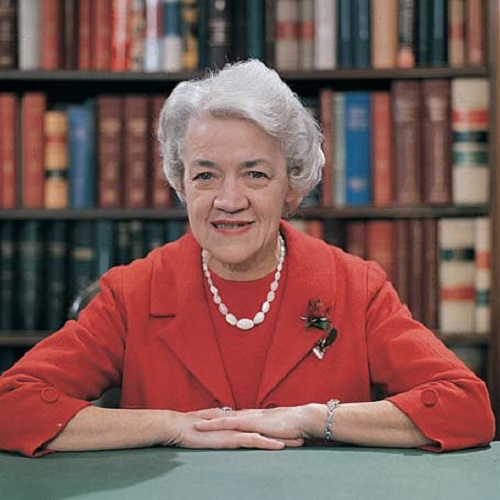
Each issue of Maine Policy Review begins with an essay in honor of Senator Smith.  The purpose of the essay is to express an idea or perspective about public affairs, our society, or the world.  The essay expresses the informed perspective of the author and often is challenging or provocative.  Recent essays have covered such topics as education, civil society, campaign reform, and welfare policy.  They can address the future as well as assess recent events or public policies.

Essays are short (800-1,200 words), and are written in plain English; the use of references or footnotes should be avoided.  They are similar in style and purpose to an editorial in the Wall Street Journal or New York Times.  In fact, occasionally the essay is a reprint from these or other national publications.  Past essays are available on request for review.

The Margaret Chase Smith Essay is usually solicited directly by the editor(s). However, unsolicited essays will also be considered. 

CONTACT INFORMATION

Articles, commentaries, Margaret Chase Smith essays, and/or your questions should be directed to either of the editors at the address below.

Kathryn Hunt, Editor
Ann Acheson, Managing Editor

Maine
Policy Review
Margaret Chase Smith Policy Center
5715 Coburn Hall
University of Maine
Orono , ME 04469 -5715

Kathryn Hunt
Phone: 207-581-1553

khunt@maine.edu

Ann Acheson
Phone: 207-581-1567
ann.acheson@umit.maine.edu

MCSPC Fax: 207-581-1266

Home     About Us     Research Units     Maine Policy Review     Conferences & Events     Student Opportunities     Related Links

   
Margaret Chase Smith Policy Center

The University of Maine, 5784 York Complex #4, Orono, ME 04469-5784
    Phone: (207) 581-1648          Fax: (207) 581-1266          mcsc@umit.maine.edu

A Member of the University of Maine System
http://www.umaine.edu