
Bulletin #4336, Best Ways to Wash Fruits and Vegetables

Food Safety Facts
By Jason Bolton, Extension Professor and Food Safety Specialist, and Robson Machado, Assistant Extension Professor and Food Science Specialist, University of Maine Cooperative Extension
For information about UMaine Extension programs and resources, visit extension.umaine.edu.
Find more of our publications and books at extension.umaine.edu/publications/.
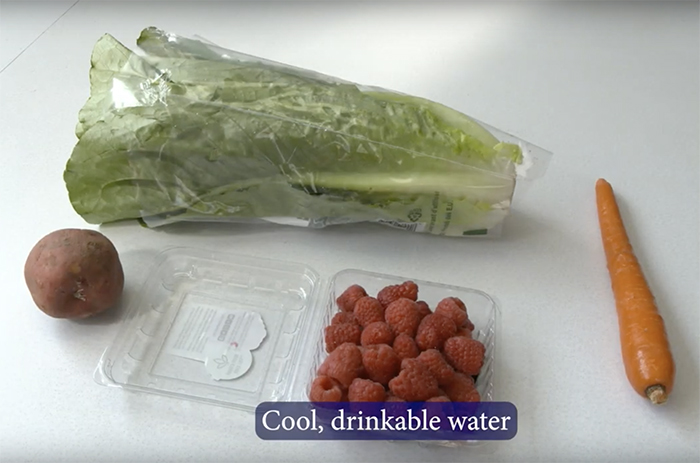
With the recent foodborne outbreaks related to produce, consumers, more than ever, have heightened concerns over the safety of fresh produce. Therefore, it is essential to know how to prevent foodborne illnesses related to these foods. Washing fruits and vegetables is the best way to reduce your risks for foodborne illness. This publication will explore the procedures for proper produce washing and handling. In addition, the effectiveness of commercial fruit and vegetable cleaners will be investigated.
Eating a variety of fresh fruits and vegetables will keep us healthy. Research has shown that eating fresh produce reduces the risk of some cancers and other diseases. Due to promotions such as My Plate, people in the U.S. are encouraged to eat more fruits and vegetables as a part of their regular diet. On the other hand, we also hear safety warnings about raw fruits and vegetables. With the News reporting E. coli, Listeria, and Salmonella outbreaks related to produce, consumers are becoming aware of the risks associated with consuming these foods. Fruits and vegetables are often consumed raw, without cooking to destroy pathogens. Thus they are potential sources of foodborne illness.
According to the FDA (Food and Drug Administration), you should wash raw fruits and vegetables very well before you peel, cut, eat or cook with them. Washing reduces the bacteria that may be present on fresh produce.
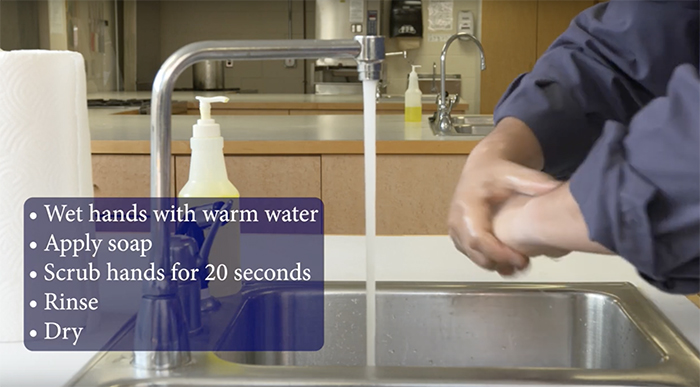
What are the best ways to keep raw fruits and vegetables safe?
- Wash your hands with hot soapy water before and after preparing food.
- Clean and, in some cases, sanitize your countertop, cutting boards, and utensils before and after peeling produce and before cutting and chopping. Bacteria from the outside of raw produce can be transferred to the inside when it is cut or peeled. After preparing each food item, wash kitchen surfaces and utensils with hot, soapy water.
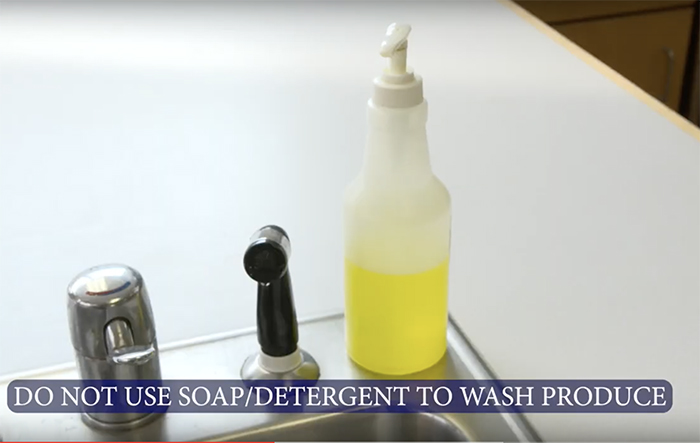
- Do not wash produce with soaps or detergents.
- Use clean potable cool to room temperature water to wash items.
- For produce with thick skin, use a vegetable brush to help wash away hard-to-remove microbes.
- Produce with a lot of nooks and crannies like cauliflower, broccoli, or lettuce should be soaked for 1 to 2 minutes in cool, potable water.
- Some produce, such as raspberries, should not be soaked in water. Put fragile produce in a clean colander and spray it with potable water.
- After washing, you can air dry or wipe down with a clean paper towel. This can remove more bacteria.
- Don’t forget that homegrown, farmers’ markets and grocery store fruits and vegetables should all be well washed.
- There is no need to rewash packaged products labeled “ready-to-eat,” “washed,” or “triple washed.”
- Once cut or peeled, refrigerate as soon as possible at 40ºF or below.
- Do not purchase cut produce that is not refrigerated.
What are the best ways to wash leafy greens?
- Leafy greens from the farmers market, grocery store, farm, or garden should be stored at 35-40°F within two hours of harvesting or purchasing.
- Wash greens by separating leaves and soaking them in a bowl of cool, potable water for a few minutes. Drain the greens using a strainer or colander and repeat this process. The goal here is dilution.
- Another technique is to presoak greens for five minutes in a mixture of vinegar and water (1/2 cup distilled white vinegar per two cups water), which should be followed by a clean water rinse. This has been shown to REDUCE but NOT eliminate bacteria contamination, and it may slightly affect texture and taste.
- Drain leafy greens with a clean strainer or colander, then dry with a clean towel or salad spinner. Salad spinners should be thoroughly cleaned with warm soapy water and allowed to air dry after every use.
Do not wash produce in soap and water. This is a bad idea as it is likely you will ingest soap residue, and this could lead to diarrhea or vomiting.
Help prevent food-borne illness from striking you and your family. Wash fruits and vegetables before you eat them.
Originally developed by Alfred Bushway, Kristi Crowe, and Mahmoud El-Begearmi, University of Maine Department of Food Science and Human Nutrition, and Cooperative Extension.
Information in this publication is provided purely for educational purposes. No responsibility is assumed for any problems associated with the use of products or services mentioned. No endorsement of products or companies is intended, nor is criticism of unnamed products or companies implied.
© 2004, 2011, 2013, 2020, 2022
Call 800.287.0274 (in Maine), or 207.581.3188, for information on publications and program offerings from University of Maine Cooperative Extension, or visit extension.umaine.edu.
The University of Maine is an EEO/AA employer, and does not discriminate on the grounds of race, color, religion, sex, sexual orientation, transgender status, gender expression, national origin, citizenship status, age, disability, genetic information or veteran’s status in employment, education, and all other programs and activities. The following person has been designated to handle inquiries regarding non-discrimination policies: Sarah E. Harebo, Director of Equal Opportunity, 101 North Stevens Hall, University of Maine, Orono, ME 04469-5754, 207.581.1226, TTY 711 (Maine Relay System).