
Abstract
Faculty from the Colby Departments of Chemistry, Geology, Biology; the Environmental Studies Program; and the Science, Technology, and Society Program propose to collaborate with the Belgrade Regional Conservation Alliance, Maine Congress of Lake Associations (COLA) and faculty at the University of Maine at Farmington to form interdisciplinary teams with stakeholder participation to understand the impact of landscape and lake-ecosystem changes in the economic development of central Maine. The Belgrade Lakes region will be used as a model because it provides a unique laboratory to understand the complex dynamics between environmental, biogeochemical, and socio-economic systems.

Project Overview
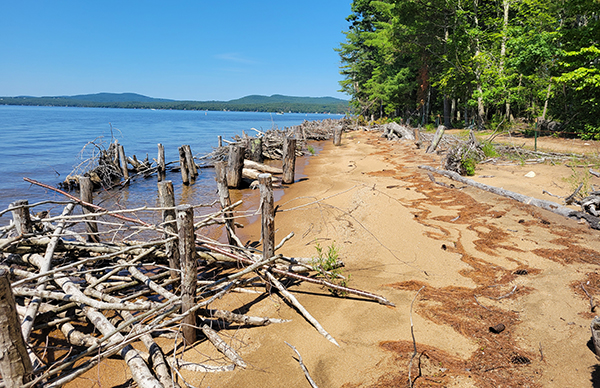
The Belgrade Lakes region comprises an interconnected chain of seven major lakes, spans 13 municipalities, and covers 180 square miles. The region is an important engine for the local economy. Over the past century the region has evolved from an area defined by clear oligotrophic lakes, small summer camps, with relatively low human-population pressure to an area defined increasingly by eutrophic lakes, year-round residences, and relatively high human-population densities. The region is an important resource for fisheries, community water supplies, recreational activities, and the local tourism and recreation economy. Water quality appears to be declining due to development pressure; the economic value of the housing inventory in these watersheds is tied to lake water quality.
Resource managers and policy makers have a limited understanding of how demographic and economic changes driving modifications of land-use patterns are affecting the physical and biological systems within this interconnected lake system at different spatial and temporal scales. The Belgrade Lakes region is a complex adaptive system where change is not predictable or linear (Carpenter & Gunderson 2001). The system is an exciting sustainability science laboratory to study coupled human-natural systems because the watersheds have the potential to have alternate stable states where function, structure, and feedback vary (Dent et al. 2002). Disturbances to either the ecological or the social systems can shift these systems into other stable states: increases in phosphorus are leading to a potential shift to a eutrophic “stable state” in some lakes; land prices, taxes, and land use regulations are shifting land use patterns and land cover; and unexpected shocks to the system, including invasive species, pollution, and economic conditions are leading to further unexpected social and ecological feedbacks.

The Belgrade Lakes system is unique in that the lakes are individual entities, but are linked physically, biologically, geochemically, economically, politically, and socially. As a result, disturbance at smaller spatial scales (e.g., home lots) and temporal scales (e.g, months, seasons, years) are having impacts on larger spatial scales (e.g., the larger Belgrade Lakes watershed and downstream rivers, watersheds, and bays) and temporal scales (e.g., decades, centuries) in unpredictable ways. We are interested in exploring how “resilient” (i.e., “sustainable”) the Belgrade Lakes system is to disturbance and change. For example, what is the current capacity of the system to assimilate nutrients before crossing a threshold into another regime that has a different identity (i.e., oligotrophic vs. eutrophic lakes)? What are the demographic, political, and economic drivers (e.g, land prices, taxes, population density, tourism, infrastructure development, zoning policies) that can positively or negatively influence the resilience of the system or the timing of the “tipping points”? How will we know when a tipping point has been reached? Conversely, how do feedbacks in the ecological relationships within the system influence the socio-economic system? Data will be gathered and used to develop models to improve understanding, prediction, and management of past, present and future changes in this and other lake regions of Maine. Results from the study can be scaled to other interconnected freshwater systems. A K-12 outreach program will raise awareness and communicate these results through detailed classroom curricula and hands-on student activities.

Solutions article: Sustaining Our Lakes (Sept 2011)
Docks to Doorways: new project calls for public access, green space and a resource center